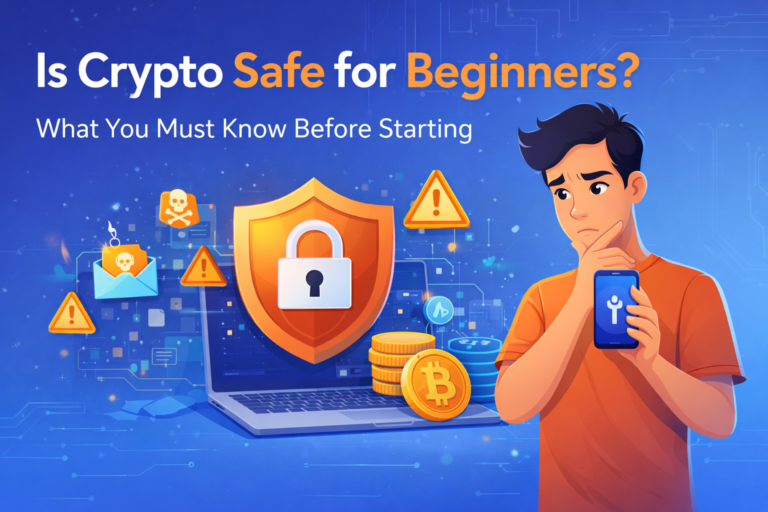
Is Cryptocurrency Safe? Risks, Security, and What Beginners Must Know

Cryptocurrency has become one of the most discussed topics in the digital economy. From news headlines to social media discussions, many people are curious about digital currencies and how they work. At the same time, beginners often ask an important question before getting started: Is cryptocurrency safe?
The short answer is that cryptocurrency can be used safely, but it is not risk-free. Understanding the risks, learning basic security practices, and using trusted platforms are essential steps for anyone new to crypto. This guide explains everything beginners should know before getting involved.
What Does “Safe” Mean in Cryptocurrency?
When people ask if cryptocurrency is safe, they usually mean several things:
- Is my money protected?
- Can my account be hacked?
- Can I lose everything easily?
- Are scams common?
Unlike traditional banking systems, cryptocurrency is decentralized. This means there is no central authority, such as a bank, that can reverse transactions or recover lost funds. While this offers freedom and control, it also places responsibility directly on the user.
Understanding Cryptocurrency Volatility
One of the biggest risks in cryptocurrency is price volatility. Cryptocurrency prices can rise or fall dramatically within short periods. This volatility is influenced by:
- Market demand
- News and regulations
- Investor sentiment
- Technological developments
For beginners, this means prices can change before you have time to react. Understanding that volatility is normal in crypto markets helps reduce emotional decision-making.
Security Risks in Cryptocurrency
Security is another major concern. While blockchain technology itself is secure, users can still be vulnerable through poor security practices.
Common Security Threats
- Phishing emails and fake websites
- Scam mobile applications
- Fake social media accounts pretending to be official platforms
- Malware that steals private keys
Many beginners lose funds not because of blockchain failures, but because of human error.
How to Protect Yourself from Crypto Scams
Scams are common in the cryptocurrency space, especially during market hype. To stay safe:
- Always double-check website URLs
- Never share private keys or recovery phrases
- Avoid “guaranteed profit” offers
- Use two-factor authentication
- Download apps only from official sources
Education is your strongest defense against scams.
Importance of Using Trusted Platforms
Choosing a reputable platform is one of the most important safety steps. Well-known platforms invest heavily in security and compliance.
Trusted platforms usually offer:
- Strong account protection
- Transparent policies
- Customer support
- Clear risk disclosures
Using unknown platforms increases the risk of fraud and loss.
Wallet Safety: Hot vs Cold Wallets
Cryptocurrency wallets store the keys needed to access digital assets.
Hot Wallets
- Connected to the internet
- Convenient for frequent use
- Higher exposure to online threats
Cold Wallets
- Offline storage
- More secure for long-term holding
- Less convenient for daily transactions
Beginners often start with hot wallets but should understand the benefits of cold storage.
Regulatory and Legal Considerations
Cryptocurrency regulations vary by country. Some governments support crypto innovation, while others impose restrictions.
Beginners should:
- Learn local crypto regulations
- Understand tax responsibilities
- Use compliant platforms
Ignoring legal considerations can lead to unexpected problems.
Emotional Risks and Decision Making
Crypto markets can trigger emotional reactions such as fear and greed. Many beginners make mistakes by:
- Buying during hype
- Selling during panic
- Following social media trends blindly
A calm, informed approach is safer than emotional decisions.
Is Cryptocurrency Safe for Beginners?
Cryptocurrency can be safe for beginners who:
- Learn before investing
- Start with small amounts
- Use trusted platforms
- Practice strong security habits
It is not a get-rich-quick system and should be approached as a learning process.
Best Practices for Beginners
Here are some simple safety tips:
- Educate yourself continuously
- Use strong passwords
- Enable all security features
- Keep backups of recovery phrases
- Avoid rushing into decisions
These practices reduce risk significantly.
Final Thoughts
Cryptocurrency offers innovative technology and new financial tools, but it comes with responsibilities. Safety in crypto depends largely on education, patience, and awareness.
For beginners, the smartest approach is to focus on learning, avoid hype, and use trusted resources. With the right mindset and security practices, cryptocurrency can be explored more safely and responsibly.